
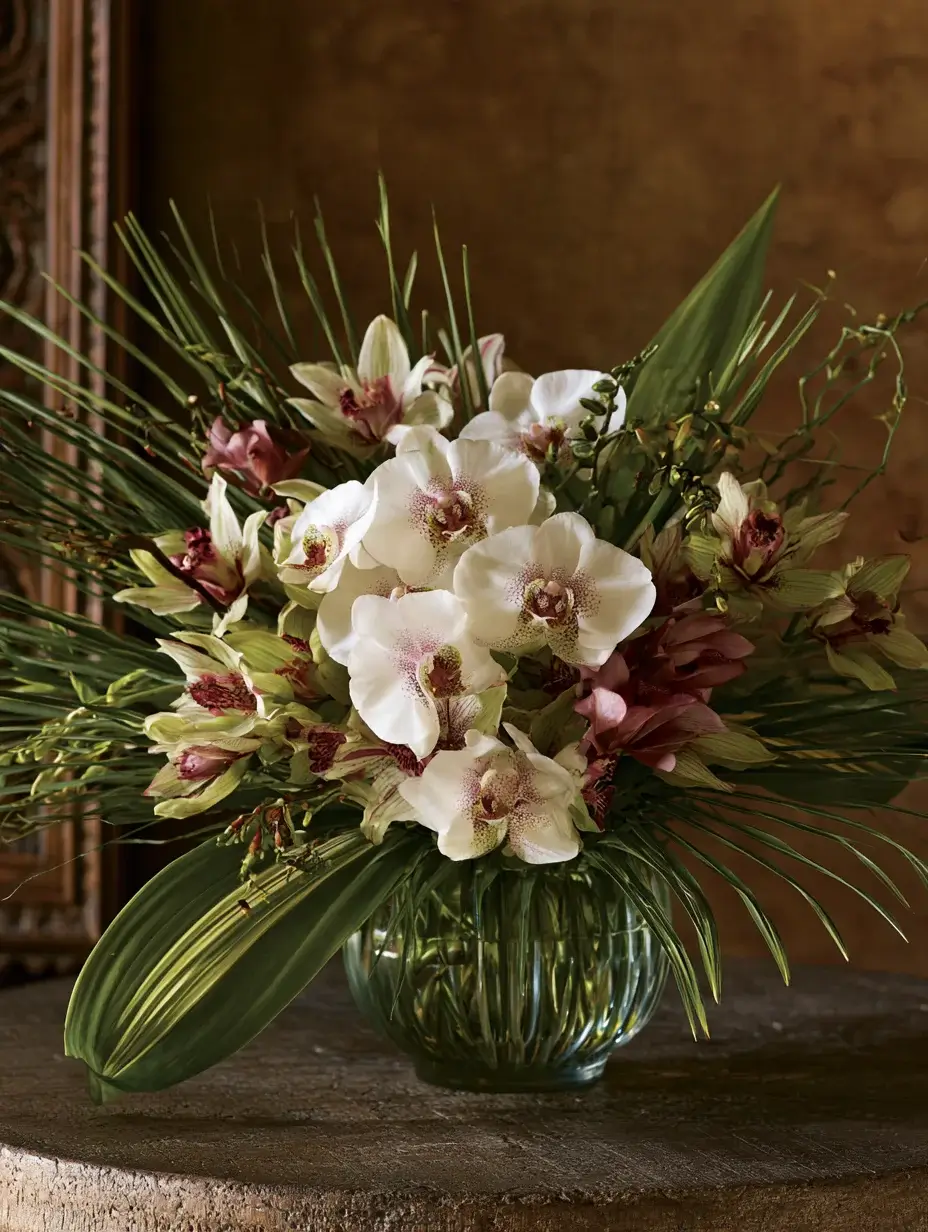
In Florida, autumn arrives by degrees rather than with a sudden turn toward cold weather. Warm afternoons and mild evenings often continue well into the season, while humidity and lush greenery remain part of the landscape.
These conditions give fall floral design a character distinct from arrangements created in cooler regions. Instead of echoing bare branches or frosted fields, a Florida arrangement can acknowledge the season while still feeling vibrant, fresh, and suited to its surroundings.
Creating a Florida Fall Color Palette
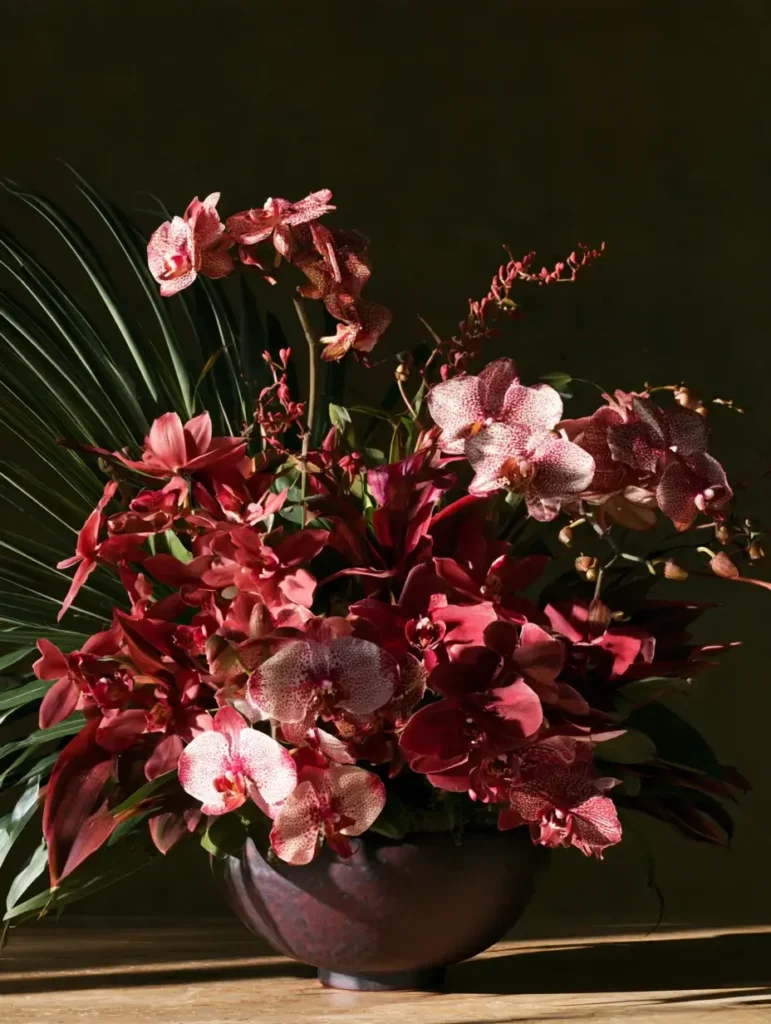
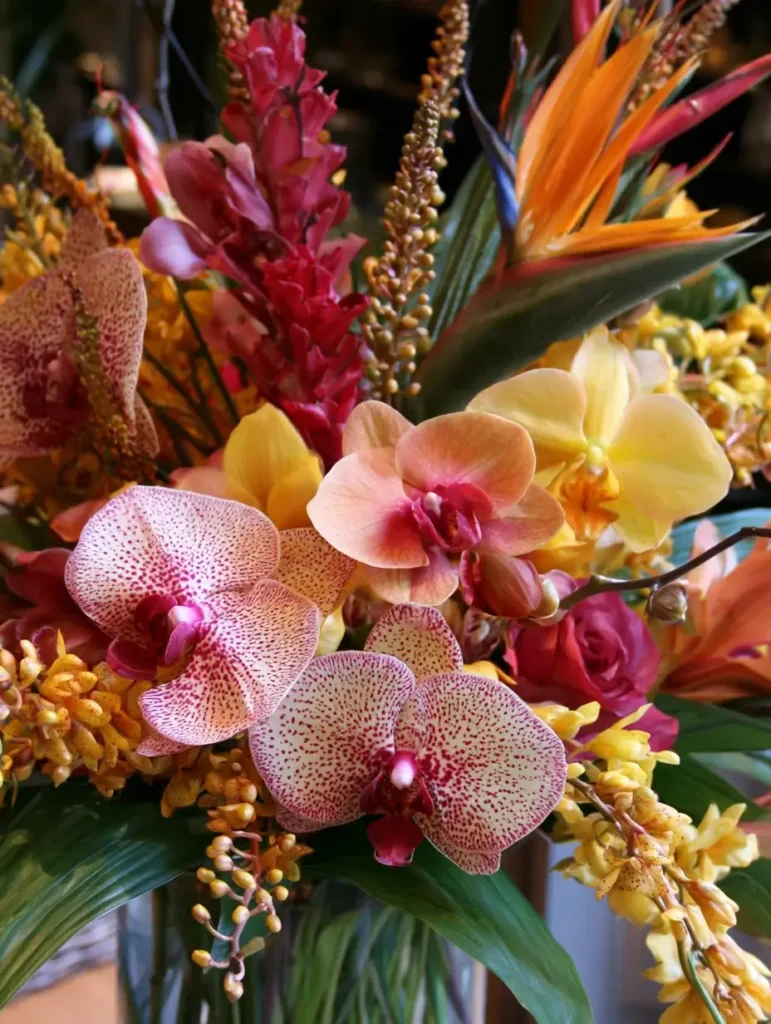
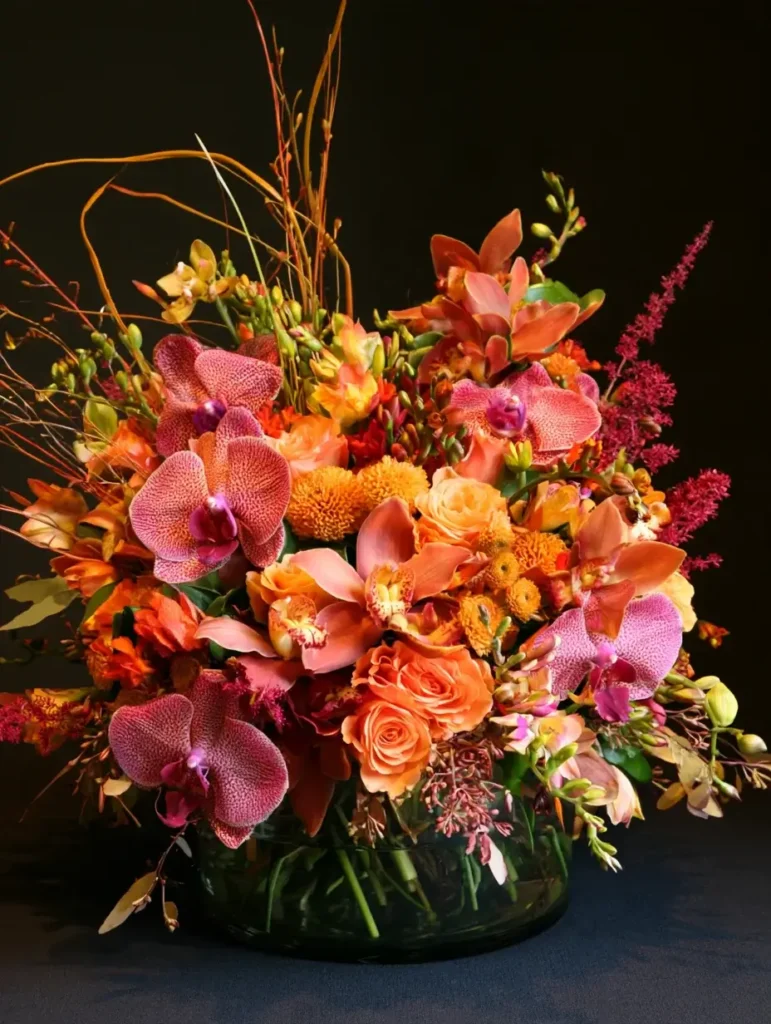
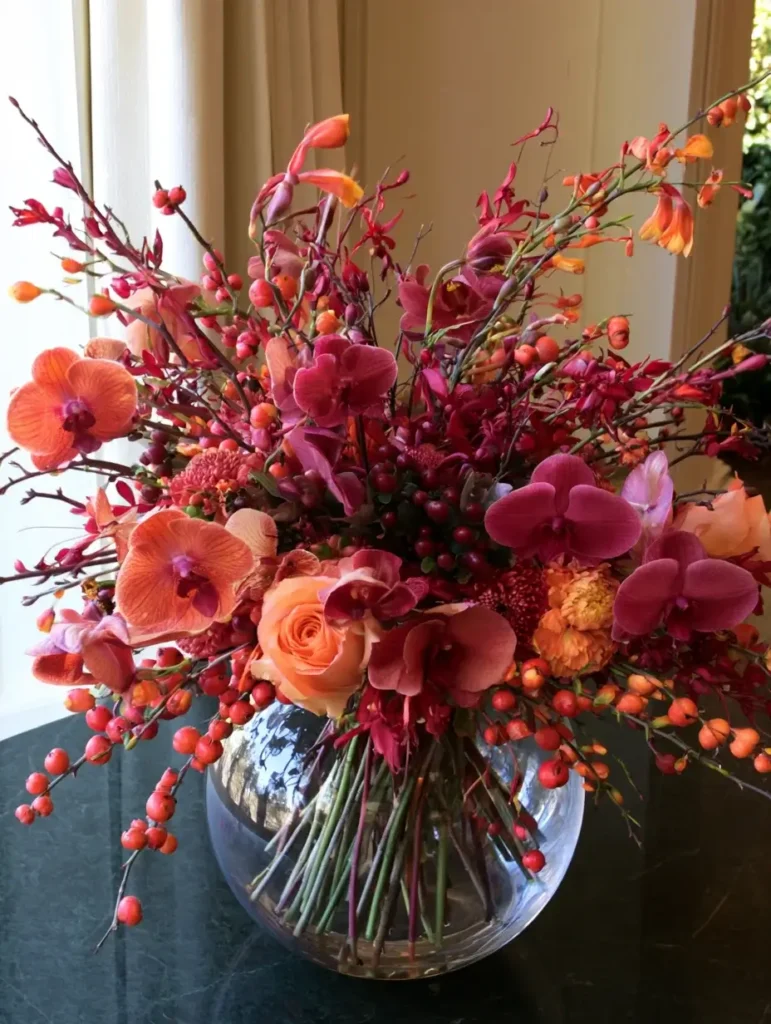
Color is one of the clearest ways to suggest autumn without relying on chilly imagery. A polished Florida fall palette includes:
- Warm Tones: Coral and amber bring warmth.
- Seasonal Notes: Rust and golden yellow introduce familiar fall feelings.
- Depth & Contrast: Burgundy adds depth, while deep green provides a grounding contrast that feels natural where foliage stays abundant.
Used together, these colors create a sophisticated seasonal look without making an arrangement appear heavy. Their intensity is perfectly balanced by the clean, graceful presence of orchids, whose sculptural blooms lend a distinctly tropical freshness.
Texture and Tropical Materials
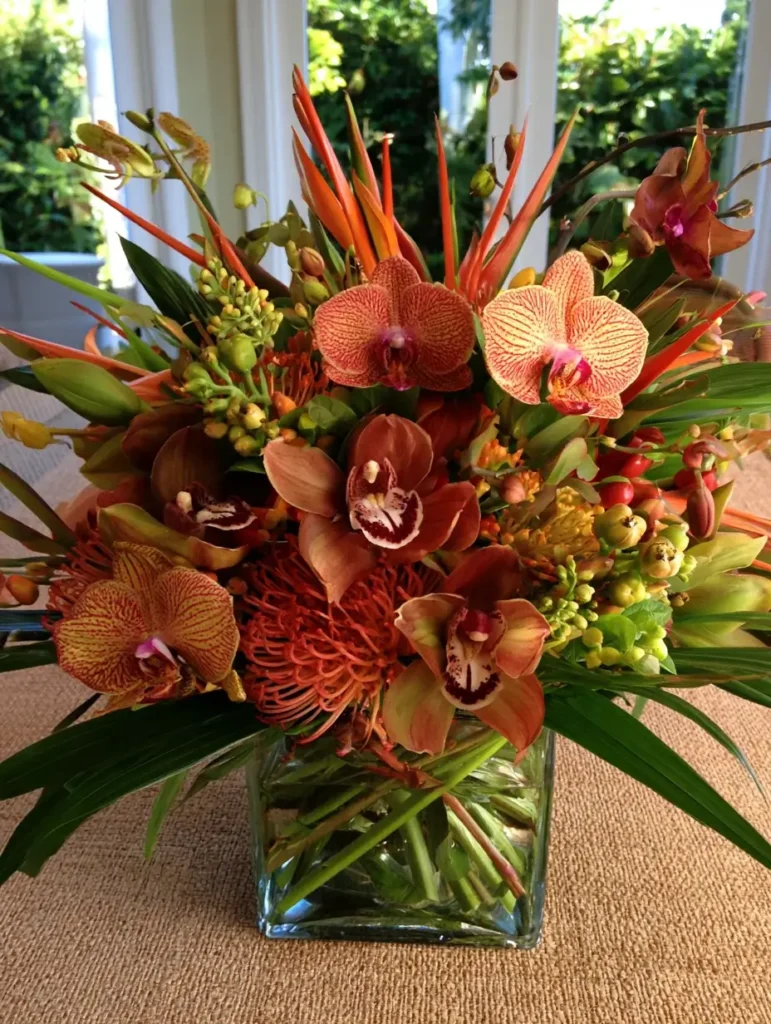
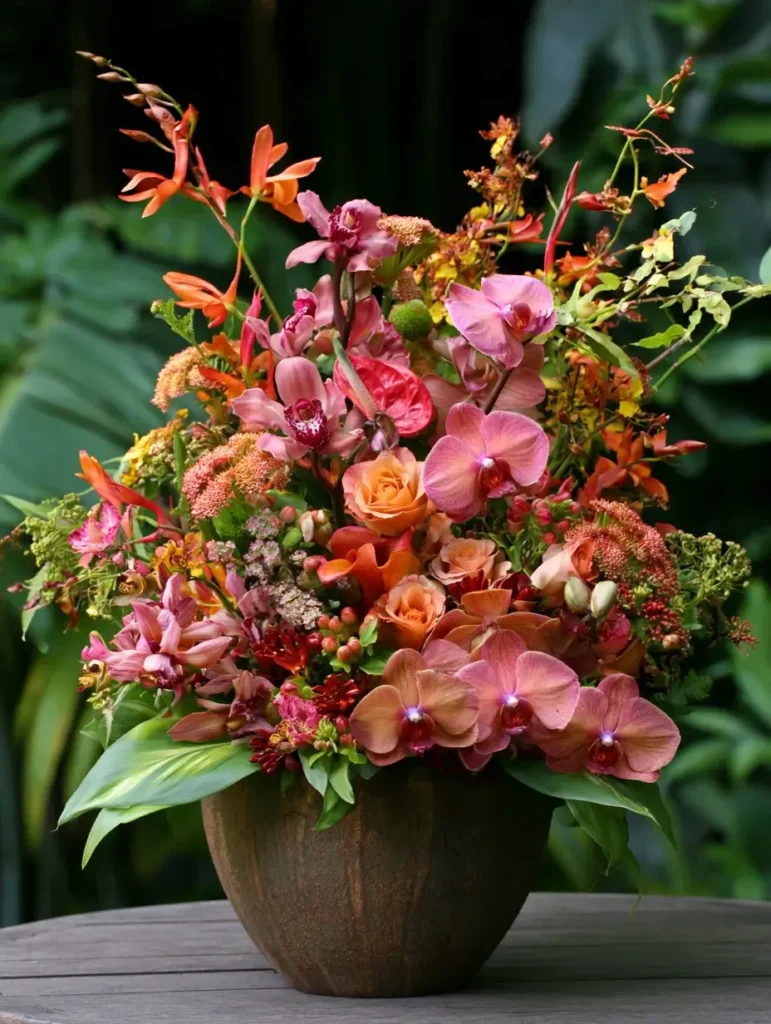
Texture helps establish a seasonal mood without traditional cold-weather decor. Smooth orchid petals can sit alongside:
- Tactile leaves and branching stems
- Seed pods and natural materials
- Locally available Florida greenery
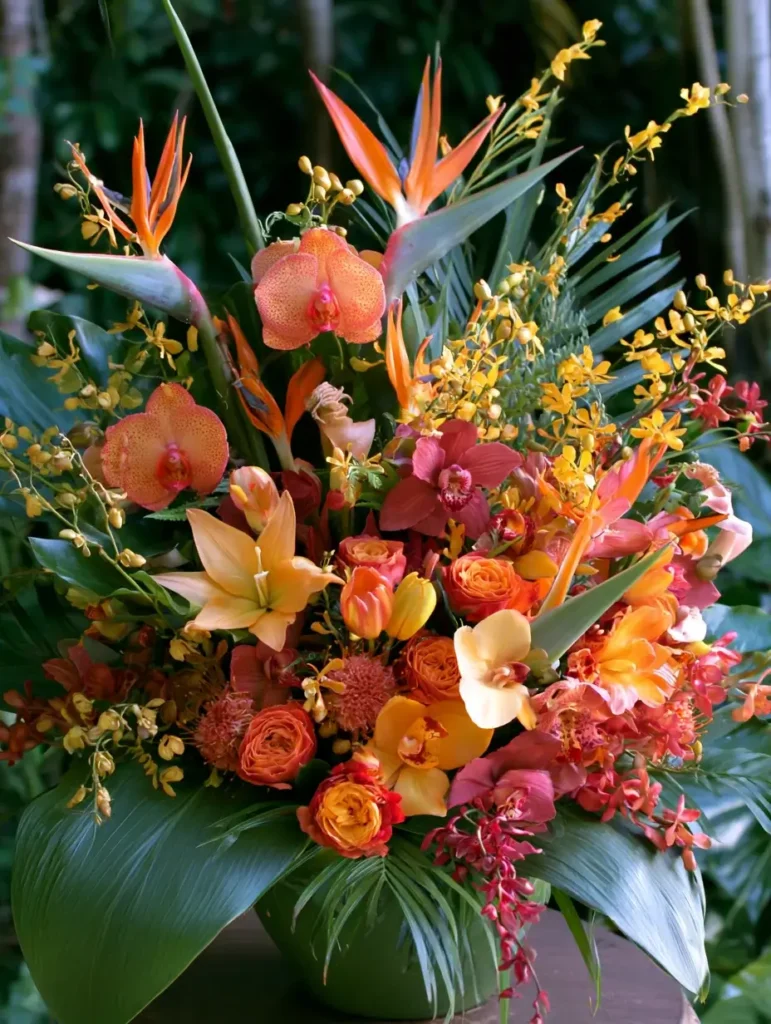
These details add visual richness without requiring pinecones or wheat sheaves associated with colder climates. The result doesn’t need to imitate autumn elsewhere to feel seasonal. A thoughtful combination of warm color, layered texture, and organic materials signals fall while respecting Florida’s persistent warmth and tropical character.
Design Tip: Orchids act as a bridge between refined seasonal palettes and tropical freshness. Their elegant forms suit autumn colors, yet their fresh appearance keeps the design from feeling wintry or overly rustic.
Choosing the Right Orchid Varieties
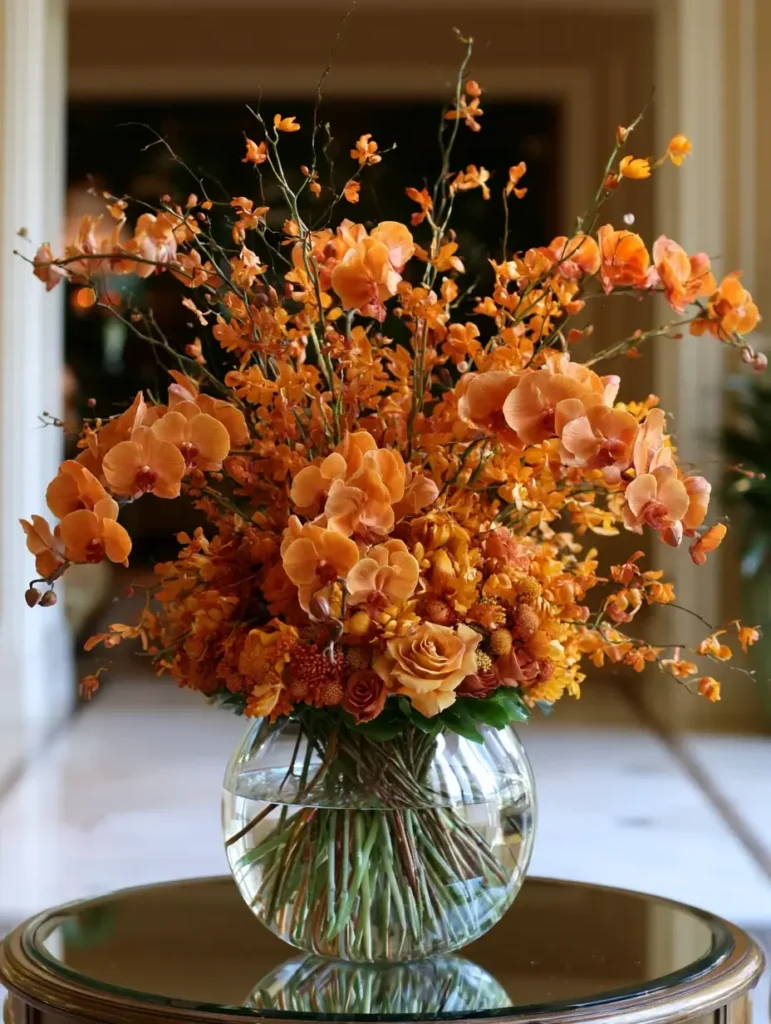
Orchids offer varied forms that can anchor a Florida fall arrangement without sacrificing an elegant, seasonal feel.
| Orchid Type | Characteristics | Best Use |
|---|---|---|
| Phalaenopsis | Arching stems, broad graceful blooms, long-lasting | Light silhouettes, extended displays |
| Dendrobium | Generous clusters of smaller flowers | Adding movement and abundance |
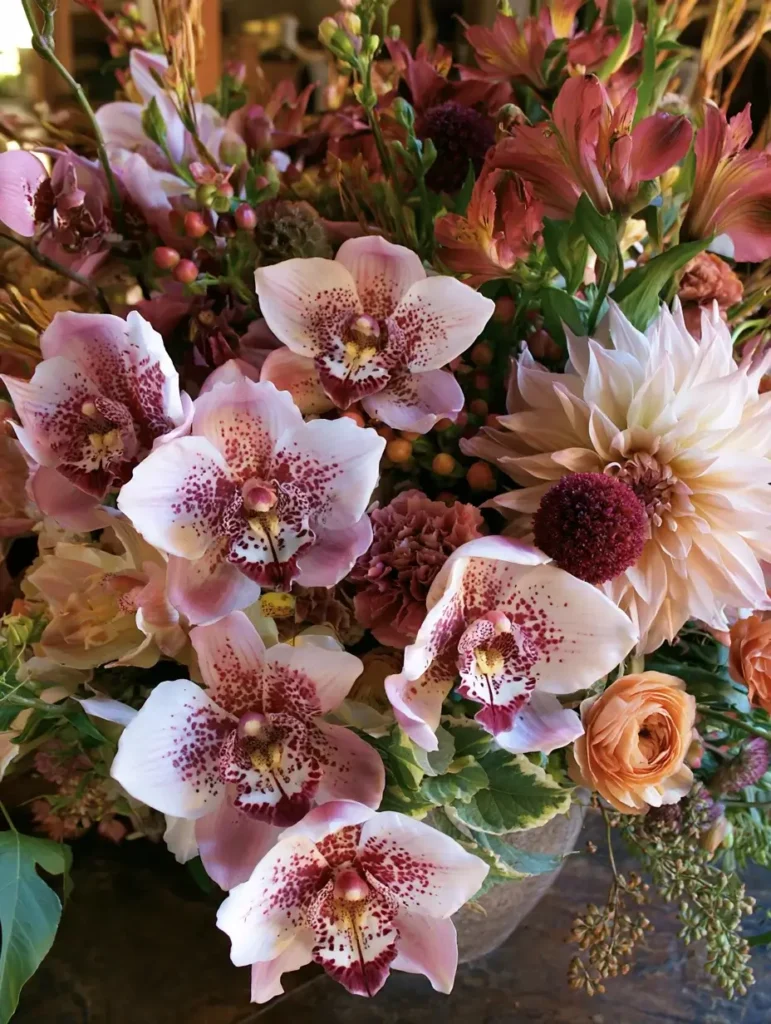
| Cymbidium | Firm stems, large waxy blooms, substantial weight | Sculptural statements, focal points |
Selection Guide: Choose varieties according to the scale of the vessel. A single stem can feel refined, while several stems create a fuller display.
Color Strategies for Tropical Fall Design
Color can connect these tropical flowers to autumn without relying on traditional fall materials alone:
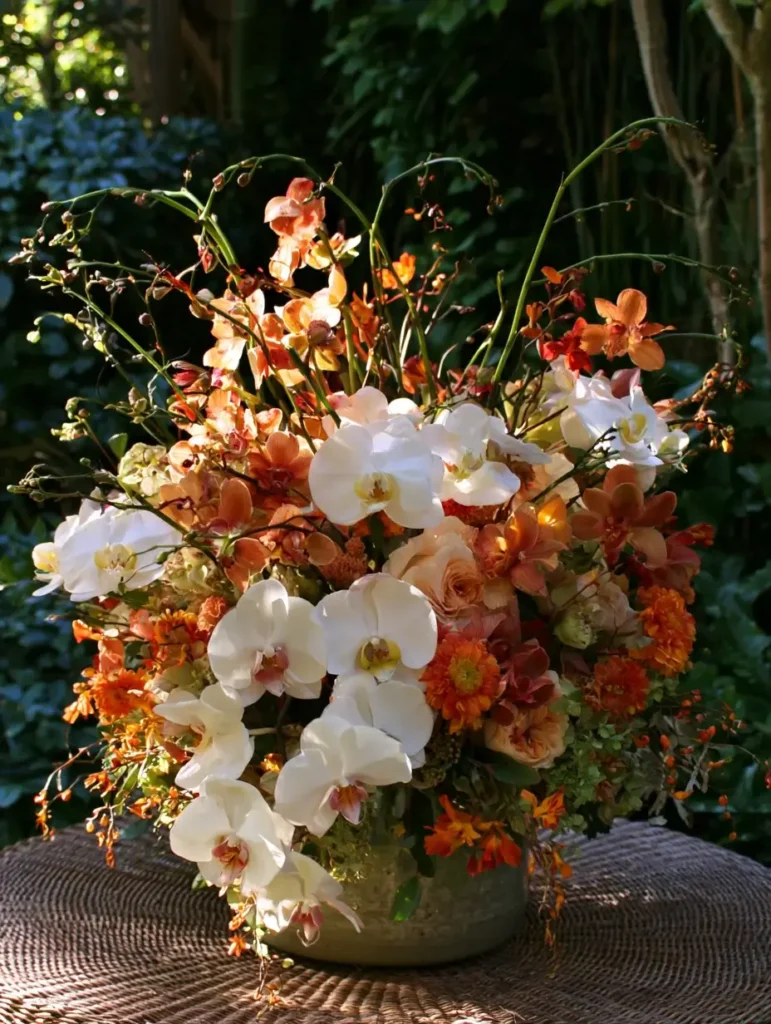
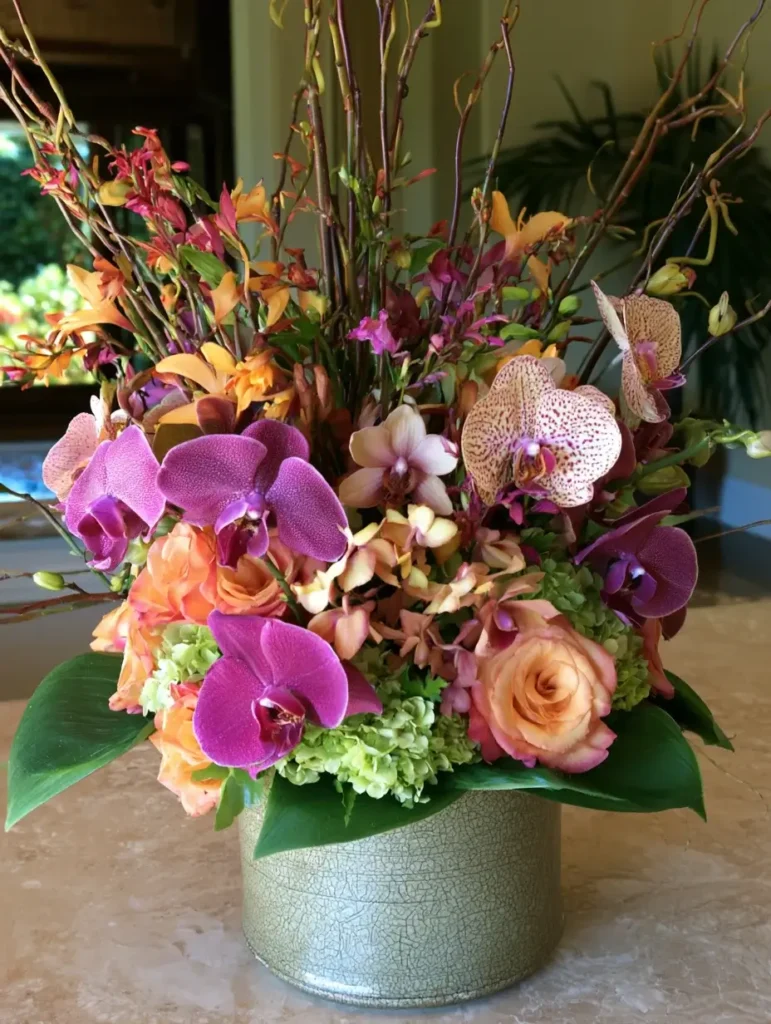
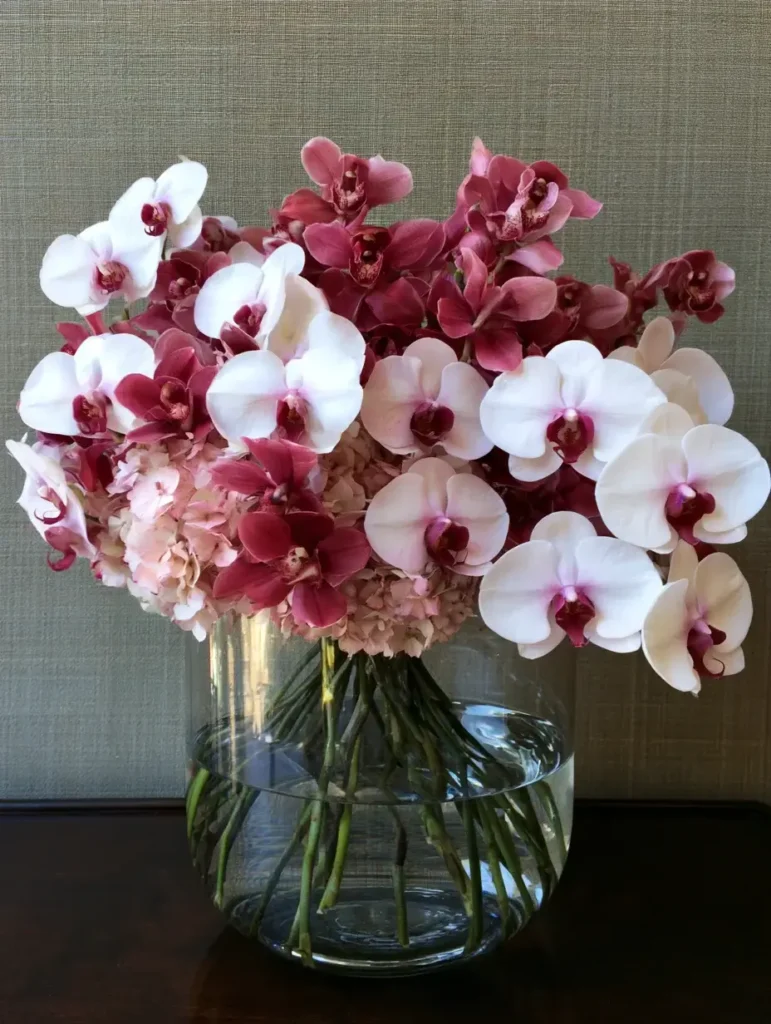
- Calm Foundation: White or blush orchids provide a neutral base beside warm accents like rust, amber, terracotta, or deep rose.
- Bold Focal Points: Richly colored orchids—including burgundy, plum, or golden varieties—can serve as centerpieces. Keep surrounding flowers quieter so their distinctive markings remain visible.
- Cohesive Palette: A restrained palette of two or three related hues usually feels cohesive, while contrast in texture adds interest without requiring additional colors.
Select companions that reinforce the palette and provide different shapes:
Best Blooms for Tropical Arrangements
- Roses & Chrysanthemums: Offer familiar rounded forms.
- Dahlias: Contribute layered petals and dramatic heads (when available).
- Anthuriums: Add glossy, heart-shaped color that echoes an orchid’s tropical character.
Essential Tropical Greenery
- Palm Leaves: Create a clean, fanlike line.
- Monstera Leaves: Bring bold, architectural shapes.
- Textured Tropical Greens: Soften transitions between blooms.
Arrangement Technique: Arrange companions around rather than directly over the orchids. Use a few larger leaves to frame the composition, then place smaller flowers in measured groups. Allow space between distinctive orchid stems, vary flower heights, and balance heavy blooms with finer foliage. This keeps the display lush but legible.
Step-by-Step: Designing Your Arrangement
1. Select the Right Container
Begin with a container that suits both the setting and the mood:
- Dining Tables: A shallow ceramic bowl or low, wide vessel keeps the arrangement welcoming and allows guests to see across the table.
- Entryways & Consoles: Choose a taller container that gives orchid stems room to rise and creates an elegant first impression.
- Materials: Neutral pottery, glazed ceramic, and natural wood provide quiet foundations. Woven textures add a relaxed, coastal note without making the design feel overly rustic.
2. Build the Structure
- Establish the Focal Point: Place a few carefully positioned orchid stems first, allowing their distinctive shapes and color to lead.
- Layer Companion Blooms: Add flowers at varied heights to create movement and depth. Use seasonal flowers in warm peach, soft coral, cream, or muted gold.
- Frame with Foliage: Use leaves to frame the orchids and soften the outline, but avoid letting broad leaves conceal their petals.
- Create Space: Keep the composition open rather than tightly packed so each bloom remains visible.
3. Adapt for Scale and Occasion
- Casual Gatherings: Compact, low arrangements work well for shared meals.
- Milestone Celebrations: Taller statement pieces suit entryways or rooms with high ceilings.
- Gifts: Select a durable vessel that can be reused and keep the silhouette easy to display.
Finishing Touch: Add subtle seasonal details like a few citrus accents, seed pods, or branches with interesting texture. A restrained metallic touch can add polish, but it should not compete with the orchids.
Orchid Care for Florida’s Climate
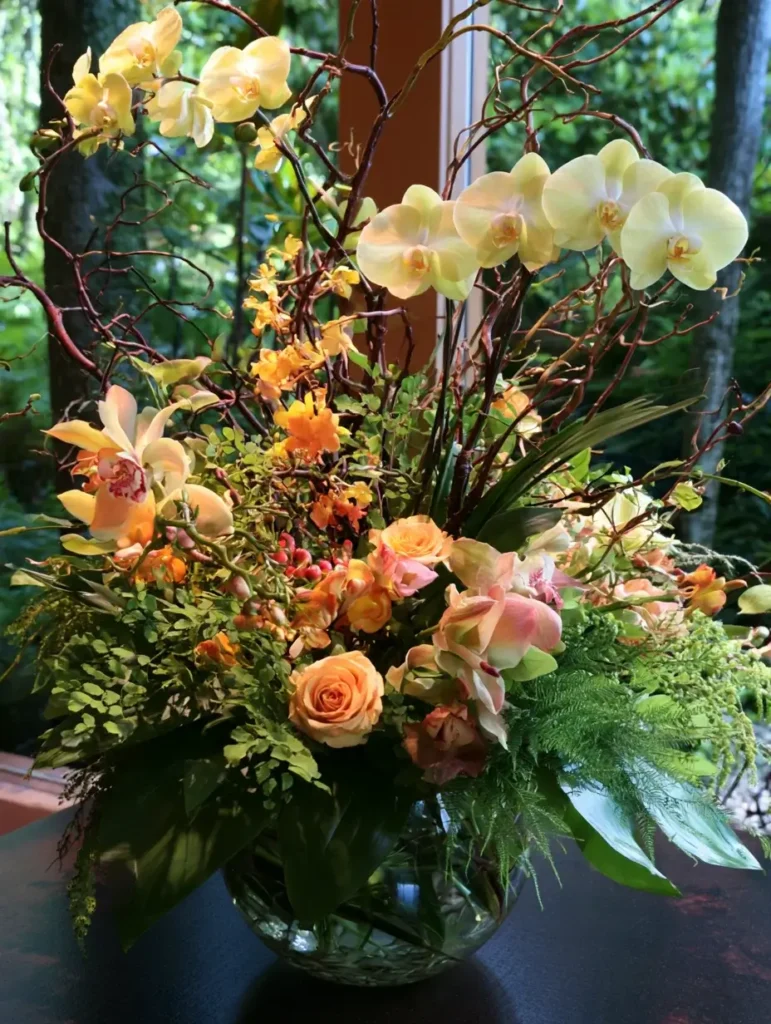
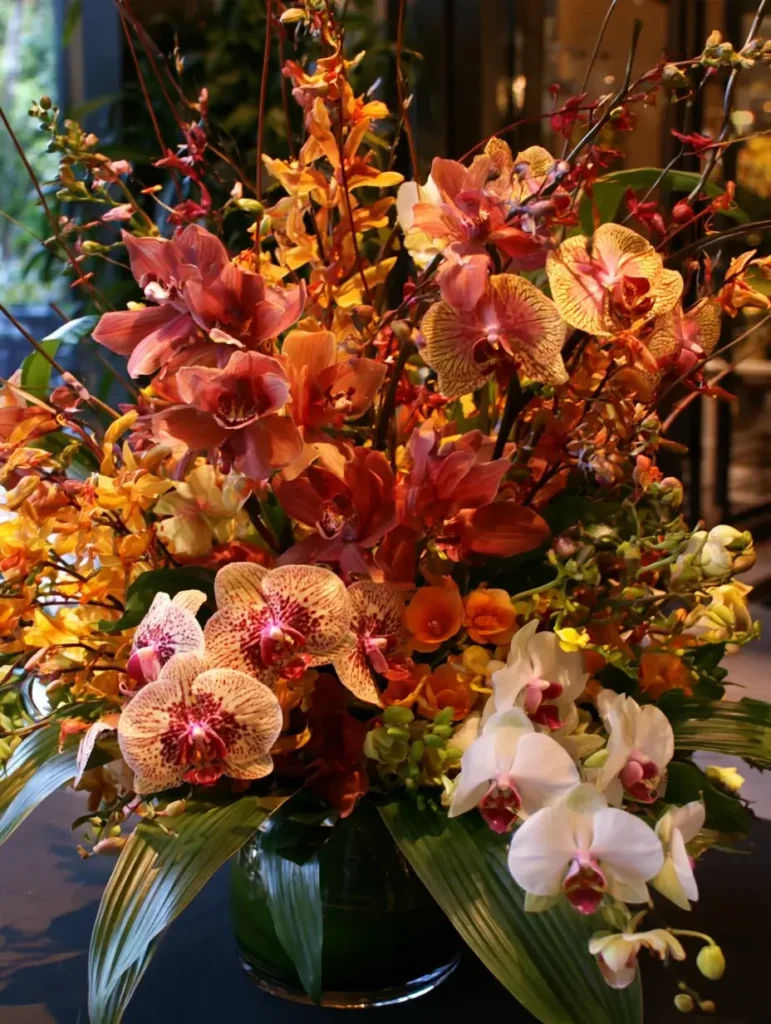
In Florida’s warm, humid autumn weather, a few careful steps can help an orchid arrangement remain graceful throughout a gathering.
Preparation Essentials
- Clean Tools: Begin with clean floral shears and a thoroughly washed vase; bacteria can shorten the life of cut stems.
- Water Quality: Fill the vessel with fresh water and use floral preservative according to its label.
- Remove Foliage: Strip leaves that would sit below the waterline, as submerged plant material decays quickly and encourages bacterial growth.
Placement and Environment
Choose a cooler indoor location for cut orchids:
- ✅ Do: Place away from direct sunlight and hot windows.
- ✅ Do: Keep away from heating or air-conditioning vents.
- ✅ Do: Keep arrangements away from fruit bowls (ripening fruit releases ethylene gas which ages blooms).
- ❌ Don’t: Place near appliances or heat sources.
Note: A consistently cool room can slow wilting. In Florida’s humidity, clean water is still essential; humid air does not replace the moisture cut stems need.
Maintenance by Display Type
| Display Type | Care Instructions |
|---|---|
| Cut Stems | Check water levels daily. Recut stems with clean shears if they become dry or clogged. Refresh water regularly. |
| Potted Orchids | Retain in growing medium. Follow usual watering routine. Do not add floral preservative or leave roots standing in water. |
Daily Checks: During the days leading up to an autumn gathering, inspect stems, water, and blooms daily. Remove fading flowers or damaged foliage as needed, and adjust the arrangement’s position if it appears stressed. These brief checks help preserve its shape and color for the occasion.
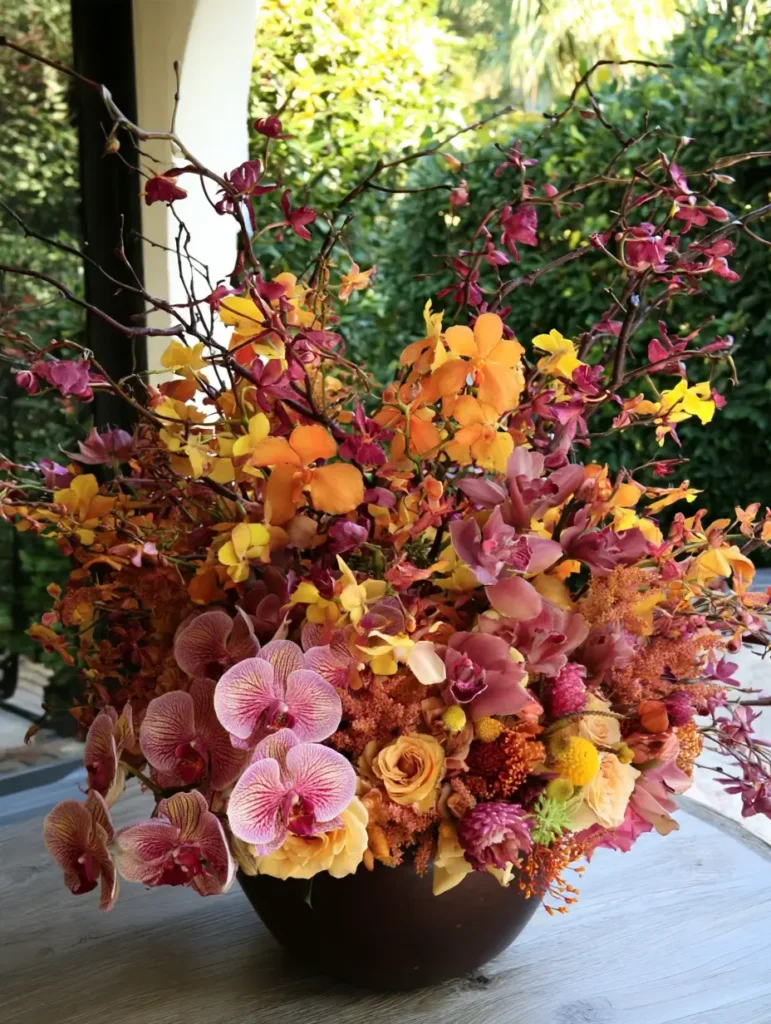
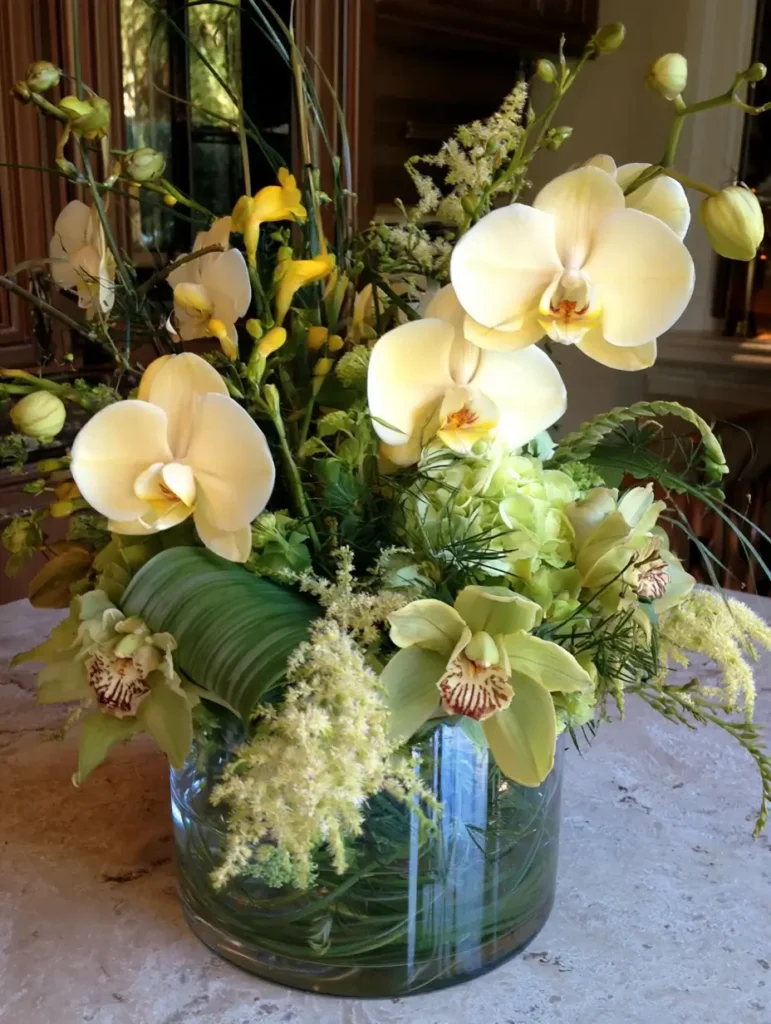
By combining the elegance of orchids with warm autumn tones and tropical textures, you can create arrangements that honor the season while celebrating Florida’s unique climate. Whether you’re designing a centerpiece for Thanksgiving or a welcoming display for your entryway, these tropical arrangements bring a fresh, sophisticated take on fall decor.
